Practical Self-Defense Training
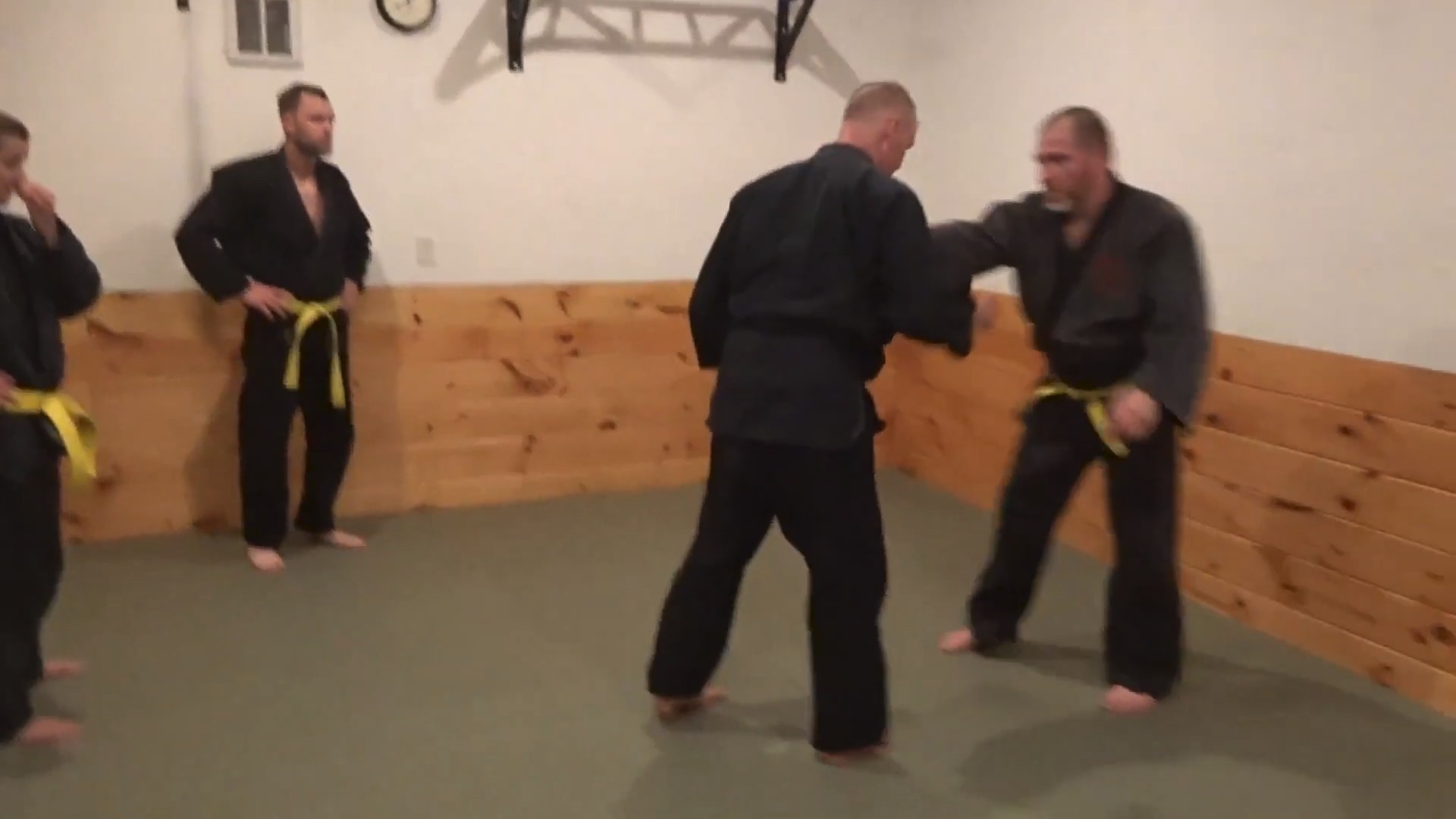
Training addresses what actually occurs outside controlled environments: close distance, imbalance, resistance, fatigue, and stress.
Students learn how to remain aware, make decisions, and function when situations do not go as planned.
Training is effective and functional from the beginning.
Training Philosophy
Self-defense training should be learnable, repeatable, and reliable under pressure.
Kobukai emphasizes skills that are easy to remember and practical to apply, taught in a traditional training atmosphere without relying on external competition.
The goal is not performance or point-scoring. The goal is capability: awareness, decision-making, and controlled execution when things are unpredictable.
Scenario-Based Training
Classes are built around realistic situations rather than memorized routines.
Training includes:
- responding to common physical encounters
- working at close range
- standing and ground situations
- interacting with resistance rather than compliant movement
The objective is adaptability, decision-making, and continued function under pressure.
Conditioning Built Into Training
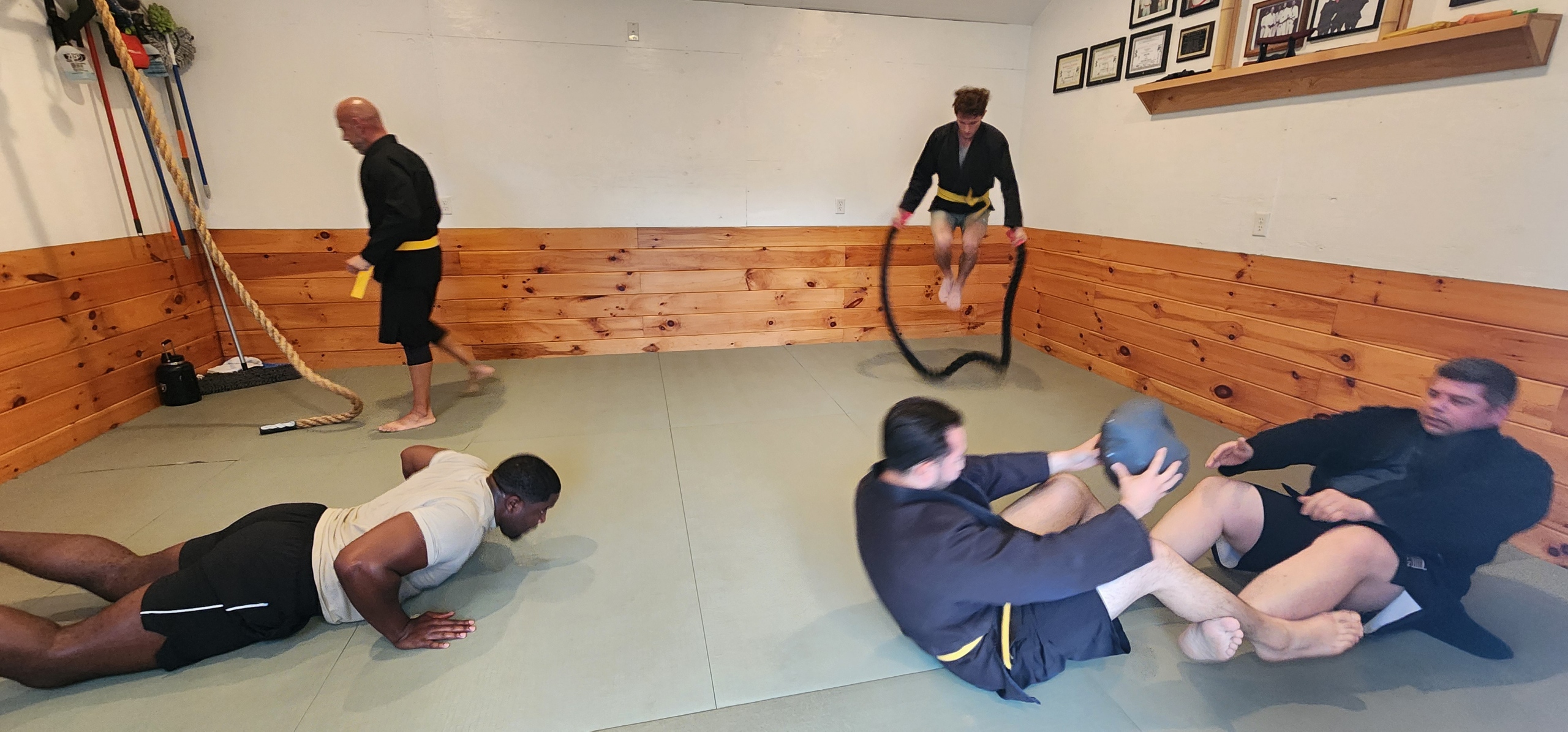
Conditioning is an essential part of training.
Self-defense requires strength, endurance, and resilience. Conditioning is developed through training itself and supports effectiveness and survivability in real-world situations.
Training Structure
Classes follow a structured but flexible format. The exact focus may vary depending on the class and the students present.
Physical Preparation
Classes begin with physical preparation to ready the body for movement and contact. This may include:
- calisthenics
- stretching and mobility
- practicing how to move safely during imbalance or contact
Skill Development Through Scenarios
Students practice practical self-defense skills using realistic situations. This includes:
- learning responses to common encounters
- practicing skills step by step
- working with partners in a controlled, cooperative way
Unscripted Practice (When Appropriate)
Some classes include practice where outcomes are not predetermined. Students learn to adapt when things change and remain functional under pressure.
Intensity and participation are guided by the instructor.